
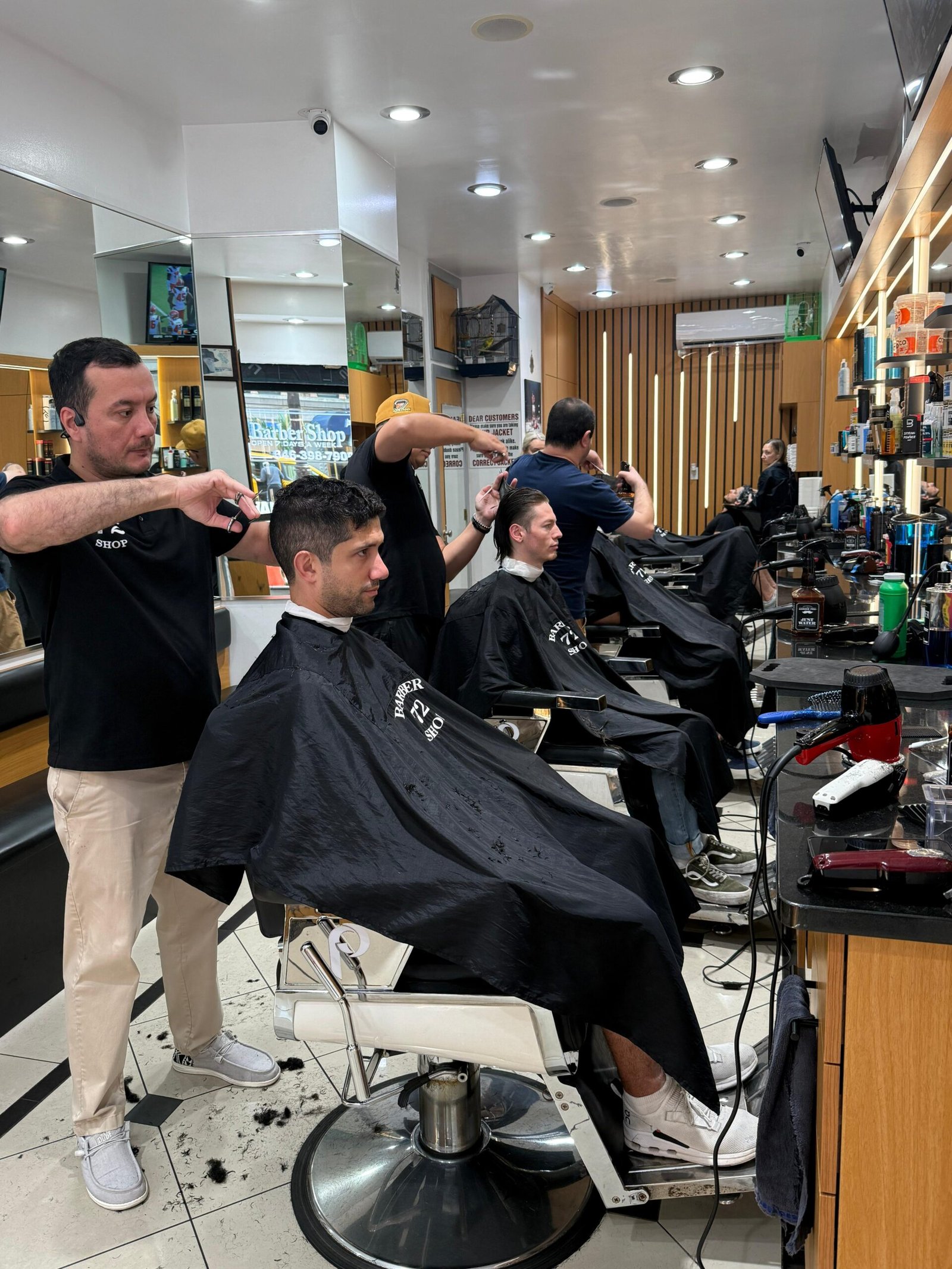
You do not need a barbering vocabulary to ask for a good fade. A strong consultation is a short conversation about where the transition starts, how close the shortest section should be, what happens on top, and how you want the edges finished. Photos help, but the reasoning behind the photo matters more than its label. Use this guide to describe the result in a way your barber can translate to your head and hair.
Understand what a fade changes
A fade gradually moves from shorter hair near the lower sides and back into longer hair above. The technique removes a hard weight line and creates a controlled transition. It does not decide the entire haircut. The top can be cropped, textured, side-parted, curly, or left long, and each choice changes how the fade reads.
When someone says only “give me a fade,” the barber still needs several answers. Where should the transition sit? Should the bottom reach bare skin? How much contrast should remain at the temple? Should the neckline look natural or sharply outlined? A minute spent on those details prevents most misunderstandings.
Choose low, mid, or high
A low fade keeps the transition close to the ear and lower neckline. It preserves more weight on the sides and usually feels understated. It is useful when you want a professional shape, when the top is longer, or when your head shape benefits from coverage around the upper sides.
A mid fade begins around the temple region and creates a more visible contrast without removing all the side structure. A high fade starts above that area and produces the boldest result. Height should be adapted to your proportions; the same line shown in a reference photo may need to move slightly to flatter your head.
Decide how close the bottom should be
A skin or bald fade is taken to the skin at its shortest point, usually with a foil shaver or razor after the clipper work. It looks extremely clean but reveals growth quickly. If you want a softer first week or have a sensitive scalp, ask for the bottom to stop at a zero, half guard, or another short length instead.
Tell your barber about irritation, bumps, scars, or areas you prefer not to expose. Going closer is not automatically better. The right shortest length balances contrast, comfort, and maintenance. A fade that leaves a little hair can still look precise while growing out more gently than a skin finish.
Explain what you want on top
Describe how you wear the top on an ordinary morning, not only how it looked after the last appointment. Do you push it back, let curls fall forward, build volume, or prefer almost no styling? Say how much time you are willing to spend and whether you use a dryer or product. That information guides length and texture.
Measurements can help, but visual instructions are often clearer. Show with your fingers how much length you want removed and identify any section you are growing. If you like the current top but want cleaner sides, say so directly. Your barber can connect a new fade without automatically taking more from the top than necessary.
Use reference photos intelligently
Bring two or three images rather than a crowded album. Choose references with a similar hair texture, density, and front hairline when possible. A photo of straight, dense hair cannot predict exactly how a loose curl will sit, but it can still communicate fade height, silhouette, or the amount of contrast you like.
Point to specific details: “I like how low this stays,” “keep this much weight at the ridge,” or “I want the top to move like this.” Also mention what you do not want. The barber can then adapt the useful features instead of attempting an exact copy that ignores your growth pattern and proportions.
Choose the outline and facial-hair connection
The temple and forehead line can be left natural, lightly cleaned, or made very crisp. A stronger line-up creates definition but may require more frequent maintenance. If your natural hairline is uneven, discuss how much correction is realistic before the barber begins. Pushing a line too far back creates a problem as it grows.
If you wear facial hair, decide whether the sideburn should fade smoothly into the beard or remain visually separate. Bring the beard length into the conversation even when you are not booking a full trim. A well-planned connection makes the haircut and beard read as one design rather than two unrelated shapes.
A simple script for your next appointment
Try this: “I want a low fade that stays below the temple, down to a half rather than skin. Keep enough weight at the upper sides so my head does not look narrow. Take about half an inch from the top, add texture, and leave the front long enough to push back.” Adjust those choices to your own goal.
Then show a reference and ask how it will work with your hair. A good consultation is collaborative, so listen when the barber explains a cowlick, density issue, or maintenance tradeoff. Clear preferences plus professional adaptation produce a better fade than memorizing technical terms ever will.